You will learn the tools faster than you will land the first client, and that gap is where most people quit. The honest pattern from operators who got through it is consistent: the first client is almost never a cold stranger. It is a former employer, a friend's business, a shop you already deal with, or a referral. A short working demo beats any pitch, the first offer should be small, and follow-up carries more weight than the first message.
This guide is about the part that matters most, because it is the part that cannot be automated. It walks through where the first client really comes from, how to reach them, and it ends with a five-name list and a message you can send this week. It expands the client section of our main guide, is an AI automation agency worth it.
Not sure which AI side hustle fits you? Start here
Our free ebook compares 5 practical ways to start a side hustle with AI: how to choose between them, how much time each one takes, what it costs to start and the first action to take. It is about a 15 minute read.
Get the free ebookWhy the first client is the real bottleneck
Learning happens at your speed. You can watch a tutorial at 2am and build a workflow by breakfast. Client acquisition happens at other people's speed, and you cannot rush it, no matter how good your systems are.

A business owner did not wake up wanting an automation. They woke up wanting a pain to stop, and most of them do not know software could stop it. Between your skill and their signature sits a chain you cannot skip: attention, a conversation, trust, a small proof, and only then a project. Every honest community thread on this topic says the same thing in different words: nobody fails at the automation. They fail at the business around it. So treat client acquisition as the actual job, and the building as the easy third of it.
Your first client is almost never a stranger
This is the single most repeated fact from people who landed a first client, and the single most ignored by the ads. Cold outreach to strangers is not where beginners win. Warm is.

Where first clients actually come from, over and over:
- A former employer. You already know their manual processes and they already trust you. This is the most common first client in community reports, by a wide margin.
- A friend's or family member's business. Not a favor, a real problem you can fix. The warm door opens the conversation; the working fix earns the money.
- A local business you already deal with. The gym, the clinic, the agency down the street. You have a face and a foot in the door that a cold emailer does not.
- A referral. Once you deliver one small result, the person who hired you knows three others with the same pain. Most operators say referrals took over after the first few projects.
None of these require you to compete with the flood of identical cold pitches. They require you to look at the people already within one step of you and ask which of them wastes hours on something you could automate.
A working demo beats every pitch
Business owners cannot picture "an AI automation." They can absolutely react to a two minute video showing their exact problem being solved. That is the difference between describing a capability and demonstrating a result.

The move that works: pick one business type, learn one painful manual task inside it, and build a small working version of the fix, even before anyone hires you. Record a short walkthrough. When you reach out, you are not asking them to imagine anything. You are showing them their Tuesday afternoon, minus the busywork. A rough demo of the real thing beats a polished deck of promises every time, because it removes the one question every prospect silently asks: can this person actually do it?
Make the first offer small
The instinct is to pitch transformation. The move that closes is to pitch one small, obvious fix. "Let me transform your business with AI" is a decision the owner has to think about for weeks. "Let me stop your front desk from retyping bookings by hand, and if it works we talk about the next thing" is a decision they can make over coffee.
A narrow first project is easier to say yes to, faster to deliver, and lower risk for both sides. More importantly, it becomes the proof. Once one manual headache is gone and they have felt the relief, the second and third projects are a conversation, not a sale. You are no longer the stranger with an AI pitch. You are the person who already fixed something.
Follow-up carries more weight than the first message
Here is the part that separates people who get clients from people who send one message and conclude the market is dead. Most yeses arrive on the second, third or fourth touch, not the first. Not because of pressure, but because timing on the prospect's side finally lines up with your reminder.
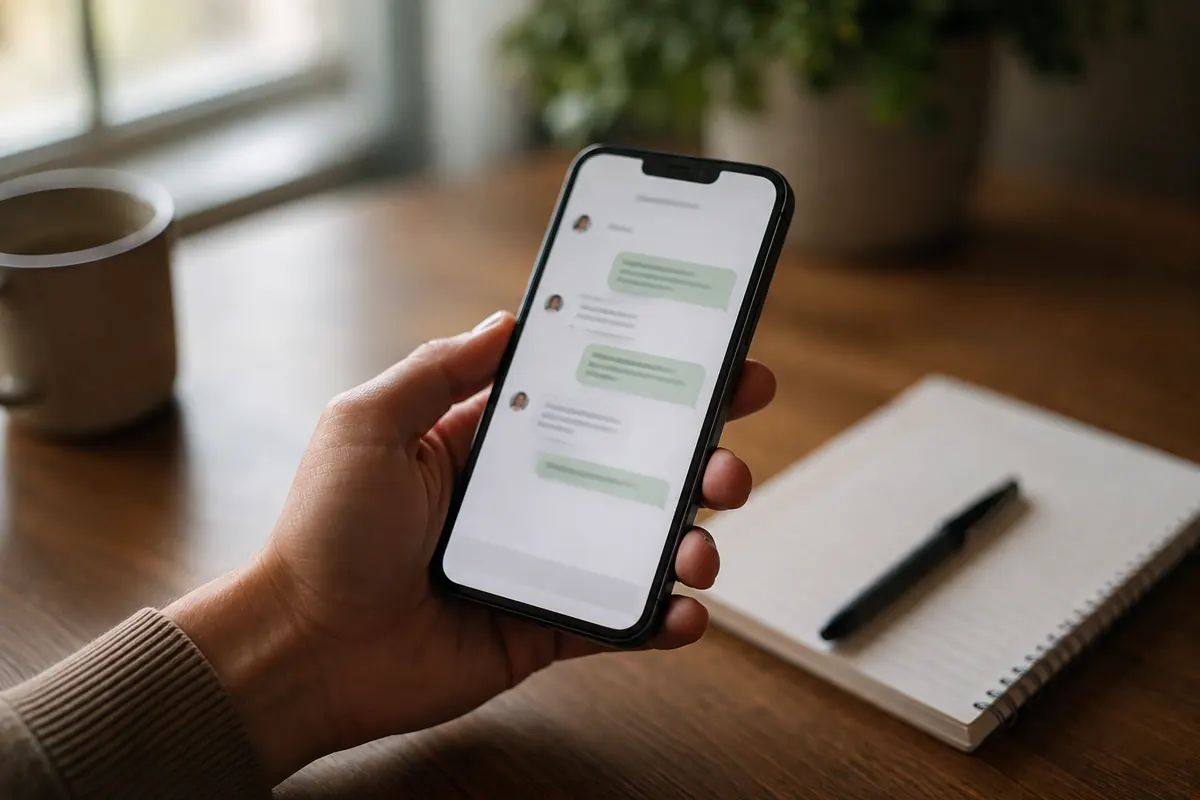
The owner who ignored you in March is drowning in the exact problem you mentioned by May. The person who follows up, politely and with something useful each time, is the one in their inbox when the pain finally gets loud enough to act on. Silence after one unanswered message is not a no. It is usually just bad timing, and follow-up is how you catch the good timing when it comes.
See the 5 AI side hustle paths side by side
Before you pay for anything, put the options next to each other: selection criteria, estimated time, starting cost and the first step for each path. The ebook is free and arrives in your inbox.
Get the free ebookWhere to actually look for the first five
Cold outreach at scale is a later-stage tool, covered as its own budget line in the cost breakdown. For your first handful of clients, work these in rough order of odds:
| Source | Why it works early | Odds for a first client |
|---|---|---|
| Warm contacts | Existing trust; you know their processes | Highest |
| Local businesses you use | A face and a foot in the door | High |
| Niche communities and groups | People already discussing the pain you solve | Medium, if you help before you pitch |
| Sharing your builds publicly | Demos attract inbound over time | Slow, compounding |
| Cold outreach with a demo | Only credible once you have proof | Low early, better later |
Notice cold outreach is last, not first. It is not useless, it is just the hardest door to open when you have nothing to show yet. Start where trust already exists, earn one result, and every other channel gets easier.
Apply it now: your five-name list
Do not close this page and "think about it." Write the list. It takes ten minutes and it is the difference between reading about clients and having a path to one.
Name five real businesses within one step of you
- A past employer whose manual busywork you remember.
- A friend or family member's business with an obvious repetitive task.
- A local business you personally use that clearly wastes hours on something.
- Someone who could refer you, even if they are not the client themselves.
- One business in a niche you understand, found in a community or group.
The first message: a template you can send today
Keep it short, specific and free of hype. You are not selling AI. You are pointing at one painful task and offering to remove it. Fill this in for the first name on your list:
That message works because it does three things at once: it is specific to them, it leads with a task and not a technology, and it asks for a tiny yes (watch a video) instead of a big one (hire me). If they say yes, the demo does the selling. If they go quiet, you follow up in a week with something useful, because you already know silence is usually just timing.
The verdict
The automation was never the hard part, and every honest thread in this space agrees. The hard part is a person deciding to trust you with a piece of their business, and that runs on a chain you cannot rush: warm before cold, demo before pitch, small before big, follow-up before giving up. Do those in order and the first client stops feeling like luck and starts feeling like a process.
If reading this made client acquisition feel heavier than the building ever did, that is the honest signal, and it is worth weighing before you invest more. Some people thrive on it. Others realize they wanted a gentler on-ramp into the same skills, which is what AI freelancing is for. Either way, decide with your eyes open. And if your gap is structure for exactly this part, a good program earns its price, which is what our guide to agency courses helps you judge.
Frequently asked questions
How do I get my first AI automation client?
Start warm, not cold. The first client is usually a former employer, a friend's business, a local shop you deal with, or a referral. Show a short working demo of their exact problem solved, make the first offer small, and follow up more than once. That sequence lands first clients far more reliably than cold outreach.
Does cold outreach work?
Better later, once you have a result to show. At the start, cold outreach with no proof competes with the flood of identical AI pitches owners already ignore. Land one warm client, then use that proof to make cold outreach credible.
How long until the first client?
No honest universal number exists, because it moves at the prospect's pace. Warm contacts, a working demo and persistent follow-up shorten it; cold outreach with no proof lengthens it. Expect it to take longer than learning the tools did.
What should the first offer be?
Small and specific: fix one painful manual task in a short timeframe, not a promise to transform the business. A narrow project is easier to approve, faster to deliver, and becomes the proof that earns the next one.
Want to compare other options before you commit? Our guide to ten ways to make money with AI puts them side by side by cost, payment and first step.
Take the next step: the free 5 Side Hustles With AI ebook
If you read this far, you are doing the smart thing: comparing before spending. The ebook turns that into a short list of paths you can start from. It is free.
Get the free ebook